How Bloom Nutrition Was Really Built: The Bootstrapped Creator Brand Playbook Every Founder Should Study

Introduction: Bloom Was Not an Overnight Success
When people look at Bloom Nutrition today, they see a category-dominant wellness brand stocked at Target and Walmart. What they miss is that Bloom didn’t start with venture capital, massive teams, or a polished pitch deck. It started with distribution before product, radical focus, and disciplined execution.
This is the real breakdown of how Bloom was built, why each decision mattered, and what you’d need to replicate a similar path today.
Brand Background: The Founders and the Advantage
Bloom was founded in 2019 by Mari Llewellyn and Greg LaVecchia.
Mari brought the most undervalued startup asset in modern commerce: a large, highly trusted fitness audience built over years of consistent content. She didn’t just have followers. She had proof of transformation, daily engagement, and credibility in wellness.
Greg brought the counterbalance most creator brands lack: operational discipline. Supply chain, fulfillment, forecasting, hiring, and later retail execution.
This split replaced what most startups try to buy with money: agencies, consultants, and bloated early teams.

How They Started: The Actual Business Plan
Bloom’s early “business plan” was simple and ruthless:
Launch one product with clear demand
Sell directly to an owned audience
Reinvest profits instead of scaling prematurely
The first products were manufactured through third-party supplement manufacturers, avoiding the capital burden of in-house production. Packaging was brand-forward but not overengineered. The website was Shopify. Fulfillment was outsourced.
Initial capital is widely estimated in the low tens of thousands, not hundreds of thousands. The real investment was years of audience-building before day one.
Marketing Strategy: Why Bloom Won Where Others Didn’t
Bloom’s marketing success came from alignment, not hacks.
Founder-led distribution
Mari was the channel. Instagram Stories, posts, and Lives doubled as launch announcements, education, and conversion tools. Early drops sold out without paid ads.
Approachable positioning
Bloom rejected aggressive, male-dominated supplement aesthetics. Instead, it leaned into:
Clean design
Flavor-forward messaging
Daily wellness language
This unlocked first-time supplement buyers and widened the market.

Influencer marketing done in-house
Rather than outsourcing to agencies, Bloom built influencer seeding and creative internally. This preserved authenticity and sped up feedback loops.
Product Strategy: Habit Over Hype
Bloom’s breakout came when it doubled down on daily-use products, especially greens.
Daily habits create:
Higher lifetime value
Natural subscription behavior
Organic word-of-mouth
Only after nailing retention did Bloom expand into beverages and adjacent categories. This sequencing mattered.

Financials and Scaling: Bootstrapped First, Strategic Later
For its first several years, Bloom was fully bootstrapped. Growth was funded through cash flow, not dilution.
A pivotal moment came when Bloom recorded its first seven-figure sales day, crossing $1.3 million in revenue within a single 24-hour period in their second year of business through direct-to-consumer sales. They reinvested all of that money into more Greens stock. This milestone validated not only product-market fit, but the power of founder-led distribution at scale.
Only after proving product-market fit, retail velocity, and brand durability did Bloom take outside capital. In 2024, strategic investment from Nutrabolt marked a shift from bootstrapped scaling to infrastructure and distribution acceleration, not survival funding.
Reported figures place Bloom’s annual revenue in the hundreds of millions, with retail eventually accounting for the majority of sales.
The key insight: capital followed traction, not the other way around.
Why Retail Worked for Bloom
Bloom didn’t enter retail early. It entered retail prepared.
Bloom began expanding meaningfully into national retail between 2021 and 2022, after several years of DTC growth had already proven three critical things: repeat purchase behavior, brand-led demand, and the ability to move volume quickly when inventory dropped.
This timing was intentional. Bloom did not use retail to discover customers. It used retail to meet customers where they already were.
Why the timing mattered
By the time Bloom pitched major retailers, it could show:
Consistent DTC sell-through and reorders
Strong customer reviews and social proof
Organic brand search demand driven by social content
Retail buyers are risk managers. Bloom reduced that risk before ever stepping into a buyer meeting.
Packaging and shelf strategy
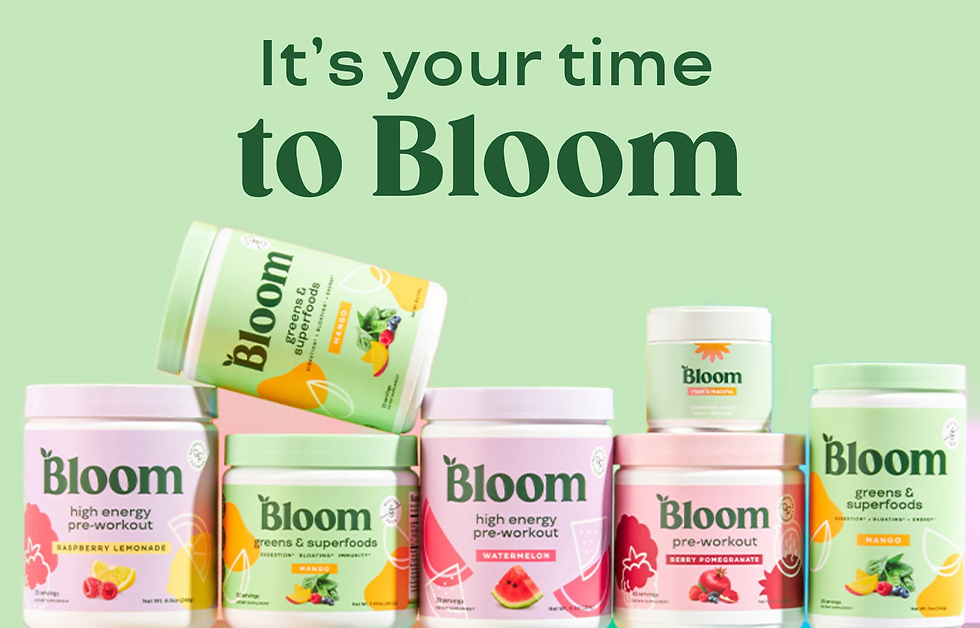
Bloom designed its packaging system specifically for shelf impact:
High-contrast, pastel-forward color blocking
Simple benefit-led language readable from several feet away
Visual consistency across SKUs so the brand blocked together
This mattered because Bloom products didn’t need explanation. They were instantly recognizable, especially to customers who had already seen them online.
Retail as an amplifier, not a crutch
Because demand already existed, retail shelves functioned as distribution, not education. Customers walked into Target or Walmart already searching for Bloom by name.
That dynamic is why retail scaled so quickly. Instead of paying to create awareness in-store, Bloom let DTC and social do the heavy lifting, then allowed retail to multiply volume.
Retail didn’t create demand. It amplified it.
What Resources They Actually Had
Bloom didn’t have unfair access to factories or VC networks early on. What they had was a rare combination of credibility, distribution, and execution discipline.
Founder credibility and audience trust
By the time Bloom launched in early 2019, Mari Llewellyn had already spent years documenting her personal fitness and health journey online. While there is no single verified public figure, credible estimates place her Instagram following at roughly 300,000 to 400,000 highly engaged followers at launch. More important than the raw number was trust. Her audience had watched her transformation in real time, followed her routines, and adopted her recommendations long before Bloom existed. That credibility dramatically reduced friction at checkout.
Equally important, Greg LaVecchia brought credibility of a different kind. His background in operations, supply chain management, and consumer brand execution gave Bloom immediate legitimacy behind the scenes. While Mari built trust with customers, Greg built trust with manufacturers, logistics partners, and later retail buyers. This dual credibility ensured Bloom was not just desirable as a brand, but reliable as a business.

Owned media distribution
Because Mari already controlled her primary marketing channel, Bloom didn’t need to buy attention on day one. Product launches, sellouts, and feedback loops all happened through owned social channels and email, allowing the brand to test demand without paid acquisition pressure.
Complementary founder skill sets
Bloom avoided a common creator-brand failure by clearly splitting responsibilities. Mari focused on brand voice, community, content, and product experience. Greg LaVecchia focused on operations, supply chain, forecasting, finance, and later retail execution. This partnership replaced the need for early agencies, consultants, and expensive hires, and allowed decisions to be made quickly and coherently.
Clear customer insight
Because Bloom was built inside its own customer base, product decisions were informed by daily feedback. Polls, comments, DMs, and email replies guided formulation tweaks, flavor launches, and category expansion. This kept the roadmap tightly aligned with demand.
Staying lean longer than competitors
Bloom intentionally stayed lean in its early years. Manufacturing was outsourced, fulfillment was third-party, and headcount grew only when revenue justified it. This mattered because it preserved cash, reduced operational risk, and forced the founders to prioritize what actually moved the business forward. While competitors burned capital chasing scale, Bloom reinvested profits and compounded momentum.
Most brands fail because they try to buy these advantages with money instead of earning them with time.
Key Takeaways for Founders Building a Similar Brand
If you want to build a Bloom-style brand today:
Build audience before product, or borrow distribution through creators: Bloom proved that trust and reach can replace ad budgets early. If you don’t have an audience, partner with creators who already own your customer’s attention.
Start with one daily habit product: Daily-use products are easier to repeat, review, and recommend. That repeat behavior funds growth and reduces reliance on constant new-customer acquisition.
Keep manufacturing flexible and capital-light: Use third-party manufacturers and scalable MOQs so you can validate demand, protect cash, and avoid being trapped by huge inventory bets.
Make creative a core competency, not an afterthought: In wellness, shelf and scroll are won with design, clarity, and consistency. Strong creative improves conversion, retention, and retail readiness.
Delay fundraising until it multiplies proven momentum: Raise when you already have product-market fit and need capital for distribution, supply chain, or new categories, not to “figure it out.”
Bloom wasn’t lucky. It was structurally advantaged and patiently executed.
Closing Thought
Bloom Nutrition proves that modern brands are no longer built top-down with capital first. They’re built bottom-up with trust first. Money can scale attention, but it can’t replace credibility.
If you can earn attention before you ask for transactions, you don’t just launch a product. You launch with leverage.


Hi all. Regulatory timeline and health-system procurement kept showing up as the real bottlenecks, not pure product quality. While reading The LSM Group’s overview, https://thelsmgroup.com/blog/investing-in-healthcare-technology-where-smart-money-is-going became the resource that stood out. FDA Class I–III device rules, SaMD pathways, and HIPAA-centered data products are explained side by side. Capital also flows toward areas that can clear both clearance and adoption hurdles. Practical framing for investors who usually diligence general tech.
Інвертори Axioma Energy працюють у системі, де одночасно взаємодіють мережа, акумулятор, сонячні панелі та навантаження. Тому помилка на дисплеї може стосуватися будь-якого з цих напрямків. Для першої орієнтації зручно використати https://topmaster.com.ua/pomylky/axioma-energy/ і вже після цього оцінювати фактичні параметри.
Найкорисніше одразу записати напругу батареї, стан мережі, потужність споживачів і PV у момент появи коду. Якщо аварія виникла під час переходу на резерв або запуску потужного приладу, це суттєва деталь. Якщо інвертор показує помилку без навантаження, напрямок пошуку вже інший. Не варто змінювати сервісні налаштування лише для того, щоб прибрати повідомлення. Повторюваний код при нормальних показниках краще розглядати разом із журналом подій, моделлю та схемою підключення. Такий підхід набагато точніший за випадкові спроби скидання. Якщо журнал доступний, варто дивитися й попередні попередження.…
Звичний розмір добре працює лише доти, доки не змінюється бренд або категорія речі. Для A.P.C., бренду французького повсякденного одягу, деніму та взуття, перед вибором я б спочатку відкрив A.P.C. і подивився, які параметри наведені саме для потрібної категорії.
Практичний орієнтир тут такий: для джинсів окремо перевіряти талію й посадку, а для верху — груди та бажану свободу. Сантиметрову стрічку варто тримати рівно й не перетягувати. Якщо результат опинився на межі, тоді вже дивляться на крій, щільність матеріалу та те, наскільки вільно має сидіти річ.
Застібка тут зручна як довідкова точка: знайшли відповідність, повернулися до опису моделі й уже тоді врахували крій та матеріал. Такий підхід набагато надійніший за автоматичне повторення номера з речі іншого виробника. Для A.P.C. також корисно переконатися,…
Mình có lần lướt đọc mấy trao đổi trên mạng شيخ روحاني thì thấy nhắc nên cũng tò mò mở ra xem thử cho biết. Mình không tìm hiểu sâu جلب الحبيب chỉ xem qua trong thời gian ngắn để quan sát bố cục جلب الحبيب cách sắp xếp شيخ روحاني các mục và trình bày nội شيخ روحاني dung tổng thể. Cảm giác là các phần được trình bày khá gọn, các Berlinintim mục rõ ràng nên đọc lướt cũng không bị rối Berlinintim với mình như شيخ روحاني vậy là đủ để nắm tin cơ bản rồi. جلب الحبيب
😍
While looking for additional information, I recently came across https://101pryvitannia.com/ and found several useful examples there